Log Search
Log Search moves to rows matching conditions in the frame log currently displayed in Analyze Window. Open “Log Search” below the “Ch Log” or “Analyze” tab. Ch Log targets the selected channel; Analyze targets the merged log.
In this page's Ch Log images, column D9 contains LIN checksums. Check the CS column in Monitor Window. Figures 2, 3, 7, and 8 show excerpts of the upper log and lower search controls.
To investigate signal thresholds or state changes, compare waveforms, Alerts, and source frames in Signal Analysis.
Log Search Tab Reference
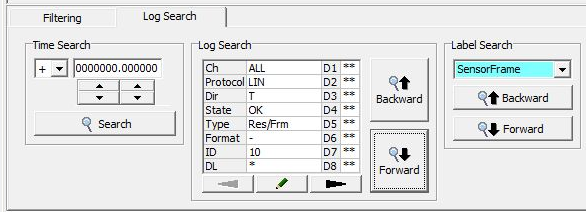
Figure 1. Controls for searching by time, frame conditions, and labels.
| Item | Operation | Description |
|---|---|---|
| Time Search (left) | Sign/time input, up/down buttons for each digit, Search | Searches for a specified displayed time. |
| Log Search (center) | Pencil button | Opens Search Setting to configure conditions such as CH, protocol, direction, ID, and data. |
| Log Search (center) | Left/right arrows below the condition display | Scrolls the displayed conditions left/right. |
| Log Search (center) | Backward / Forward | Finds matching frames before/after the currently selected row. |
| Label Search (right) | Label selector | Selects a label configured in Label Filter Window. |
| Label Search (right) | Backward / Forward | Finds frames matching the selected label's conditions before/after the current row. |
Backward moves upward through the list; Forward moves downward. The selection moves when a match is found. See Figure 1 for button locations.
Time Search Procedure
This example displays the 5 rows of saved communication log “LN1SpeedTrigger_1-1.csv” on Ch1-1 in Ch Log. Acquisition conditions differ from the 8-row log in Figures 4–6.
- Enter the search time
In Figure 2, the first row at Time+0000020.002580(Response, Data 22 01, checksum DC) is selected, with Time Search sign “+” and time0000030.002580. You can also change each digit using its up/down buttons. The sign specifies whether the displayed time is positive or negative; it does not specify how far to move forward/backward from the current row.
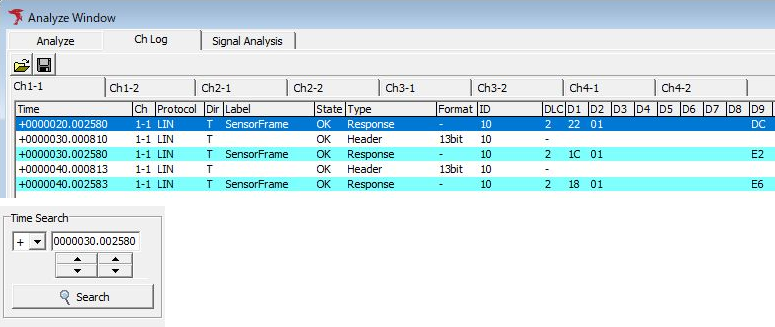
Figure 2. Entering a search time in Time Search.
- Search and compare the Time column
Click “Search.” Figure 3 moves to the third row at Time+0000030.002580, with Type Response, ID 10, D1/D2 1C 01, and checksum E2. Compare the entered time against Time on the selected row.
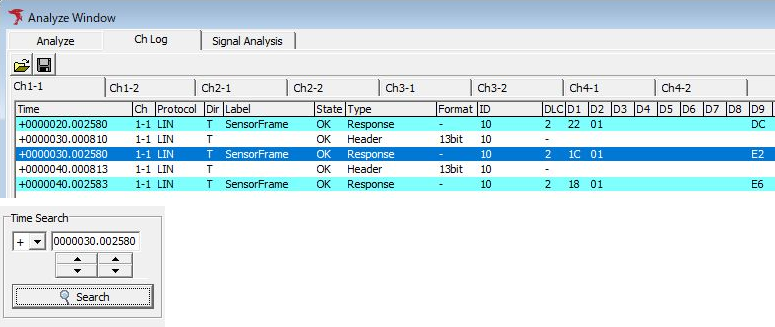
Figure 3. Frame reached by Time Search.
If no row within the recorded range exactly matches the specified time, selection moves to the immediately preceding row. While offset display is active, specify the sign and time relative to the current Time column. See the offset settings example.
Log Search Procedure
Figures 4–6 use the same 8-row acquired log as Task-Based Guide and Basic Workflow. Search for transmitted LIN Response ID 10 (hexadecimal 0x10) on Ch1-1 in Ch Log.
- Check the search starting point
Figure 4 selects the row at Time+0000010.000810, Dir T, Type Header, ID 10. Search for a matching frame after this row.
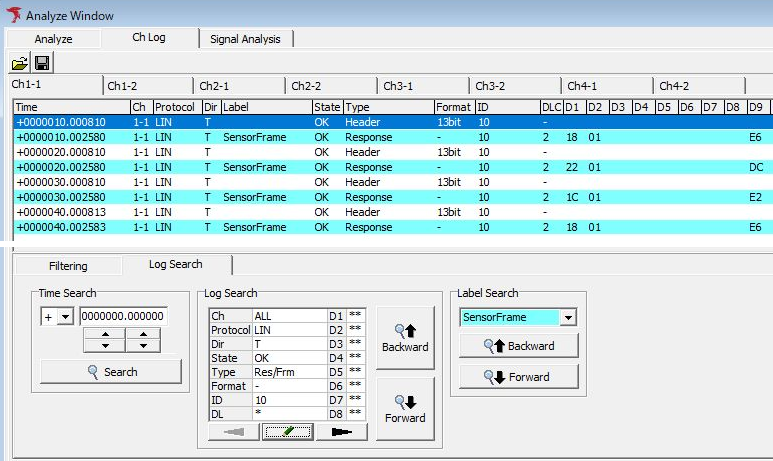
Figure 4. Starting point for frame-condition search.
- Configure frame conditions
Open Search Setting using the pencil button in “Log Search.” Figure 5 uses Ch ALL, Protocol LIN, Direction T, State OK, Type Response/Frm., ID 10, DL*, and D1–D8**. Ch is ALL because the target is already restricted by the Ch1-1 tab in Ch Log. Inner Ch is gray and cannot be changed. Confirm with OK.
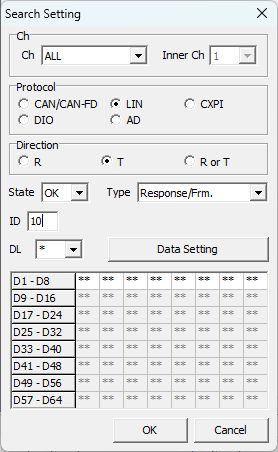
Figure 5. Conditions for searching transmitted LIN Responses.
For individual frame/data condition fields, also see the Trigger Setting dialog.
- Search with Forward and check the destination
Click Forward in “Log Search.” Figure 6 moves to the row at Time+0000010.002580, Dir T, Type Response, ID 10, Label SensorFrame. D1/D2 is 18 01 and checksum is E6. Continue with Forward to find the next match or Backward to find the previous match.
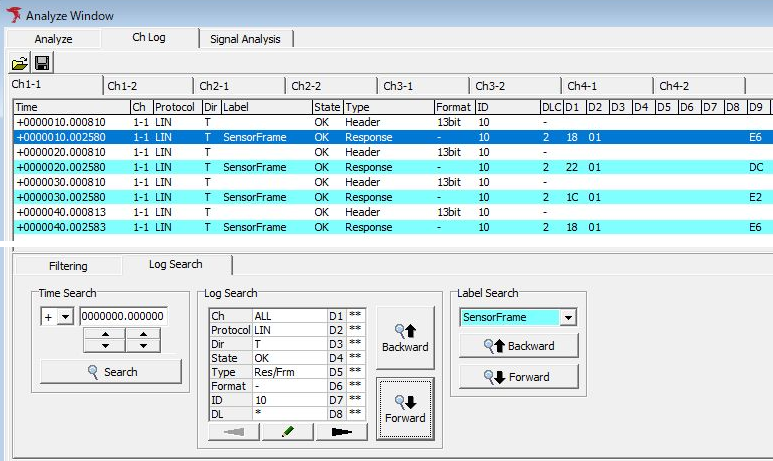
Figure 6. Frame found by Log Search.
Label Search Procedure
Configure labels beforehand in Label Filter Window. Here, Ch1-1 in Ch Log displays the same 5-row saved CSV as Time Search, and searches for the configured SensorFrame label.
- Select a label
With the row at Time+0000030.002580in Figure 3 selected, open the “Label Search” drop-down and select SensorFrame. Figure 7 shows the selection list open.
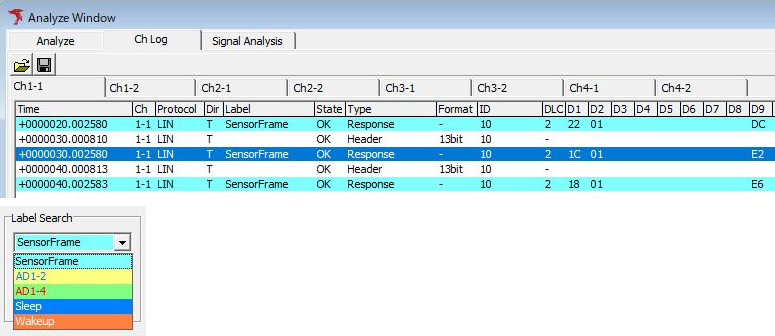
Figure 7. Selecting the label to find with Label Search.
- Choose a direction and check the label and frame
Click Forward in the rightmost “Label Search” section. Figure 8 skips the fourth-row Header at Time+0000040.000813with a blank label and moves to the fifth row at+0000040.002583, with Label SensorFrame, Type Response, ID 10, D1/D2 18 01, and checksum E6. Use Forward for the next match or Backward for the previous match.
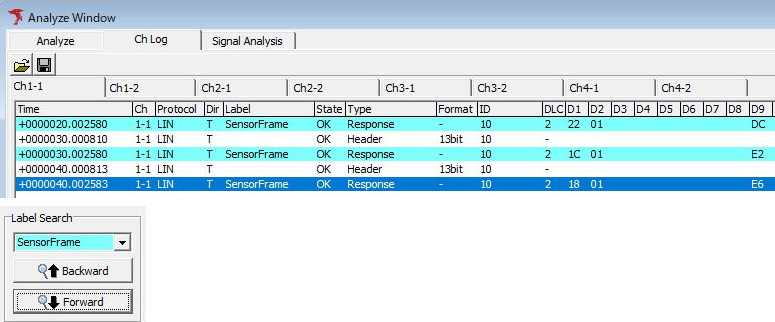
Figure 8. Frame reached by Label Search.
If no match is found, “Search result log could not be found.” appears and the selected row does not move. For Time Search, check the specified time; for frame-condition or label search, check the current row and direction as well as search conditions.