Save and Load Settings
You can save the GUI application's settings to a file and load them from a saved file.
What Each Signal-Related File Saves
| Format/operation | Saved content | Not included | Load destination and scope | Checks on another device or environment |
|---|---|---|---|---|
| MPXXML | Selected general settings. Signal Monitor Setting contains signal and display settings deployed to device channels; Trigger Setting contains recording conditions; Simulation Setting contains transmission settings such as adopted frames and responses. | The entire Catalog, all Sets, and original communication logs. | Applies items selected in Load Configuration. For different devices, select the target CH in Ch Config Import. | Check the target CH, communication settings, signal references and triggers, and adopted Simulation definitions and HEX data. |
| MPXSIG | Catalog, all Signal Sets, CH assignments, display and graph settings. | General Device and Simulation settings, communication logs, and analysis results. | Load in the shared Catalog replaces the Catalog and all Sets. In the analysis definition selection screen, use Load Signal Set. | A mismatch in device/CH configuration clears CH assignments in all Sets. Reassign channels for the Set you will use. |
| Communication log CSV | Original frames including time, CH, ID, DL, and data. | Signal definitions and display settings. | Load logs in Analyze. Compatible communication logs can also be used in Log Replay. | Keep the LDF/MPXSIG used during capture with the log, and match the log channels when analyzing. |
| Analysis CSV | Selected signal values and validity, and selected source data information. | The entire original communication log, analysis settings, and annotations. | View in a spreadsheet or similar tool. Not for reconstructing communication logs or for Log Replay. | Keep the original log, definitions used, and analysis range together. |
| Alert History CSV | Alert activation and recovery history. | Condition definitions and communication logs. | View in a spreadsheet or similar tool. Not for loading conditions. | Check the signal, condition name, and activation/recovery times. |
| Window layout | Window arrangement. | Signal definitions, graph settings, and analysis data. | Applies the arrangement through Layout. | Check which windows you want to display. |
| Graph image | The selected Area as displayed. | Data and definitions for reanalysis. | View as an image. | Record the log, definitions, and time range used alongside the image. |
| Analysis annotations | Times, titles, and comments within the open log session. | Not saved in MPXSIG or analysis CSV. | Cannot be restored from a file. | Record necessary information separately before switching logs. |
When migrating to another device, save the required general settings in MPXXML and the complete definitions in MPXSIG. After loading, check the Current Set and CH assignments, and reselect trigger signals as needed. Before starting transmission, also verify the Simulation execution conditions.
When Signal Settings Cannot Be Loaded
At startup, the application restores the Current Set automatically saved at the previous exit. Device → Refresh rechecks the assignments of the current Set. Depending on the connected devices, only some channels may be restored. If a channel is disconnected, or the same physical channel maps to a different channel number than when saved, Signal Monitor Setting cannot be selected in either Load Config or Ch Config Import. Other load items remain available. Restore the device and channel configuration used when saving, run Refresh, and check the status bar notifications.
After loading Signal Monitor Setting from MPXXML, if not all target devices and internal channels in the file can be identified, applying the loaded settings to the Current Set is deferred. Reconnect all devices indicated in the status bar and synchronize them with Refresh. During this time, Signal Monitor Setting cannot be selected in Ch Config Import. You can still load different settings using Load Config.
Saving Settings
You can save the GUI application's settings to a file.
Follow the steps below.
- Open the Save Config dialog
Use any of the following operations to open the Save Config dialog.
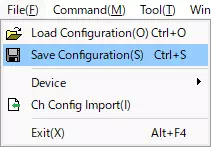
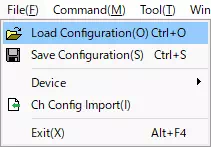
- Select File → Save Configuration from the menu bar.
- Click the toolbar
 button.
- Hold Ctrl and press S.
- Specify the configuration file destination
Click the button in Save Config. In the file dialog that opens, specify the destination and name for the configuration file.
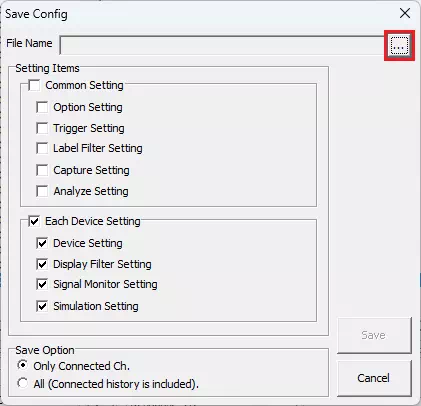
If you specify an existing file name in step 2, the following confirmation dialog appears.
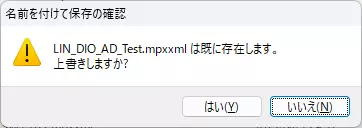
Click Yes to overwrite the existing file.
- Select the settings to save
In Setting Items in Save Config, use the checkboxes to specify whether to save each setting. ON includes the setting; OFF excludes it.
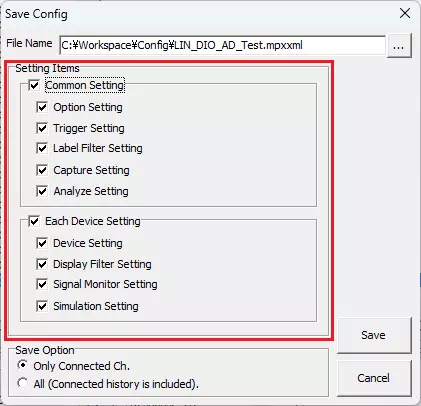
- Save the settings
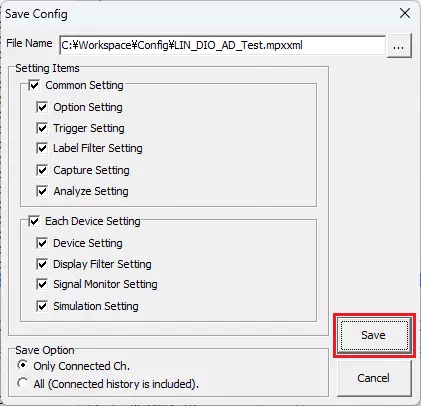
Click the button in Save Config. The settings selected in step 3 are saved to the file specified in step 2.
Save Config Dialog
The Save Config dialog saves settings from each window and the Option dialog to a configuration file.
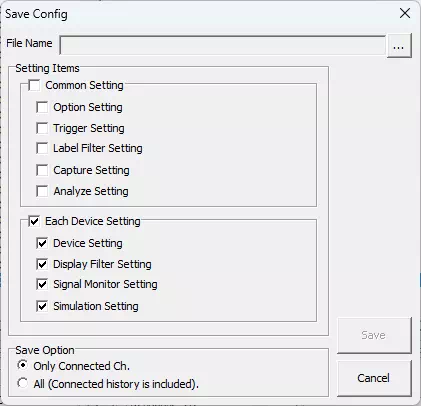
| Item | Description | Additional information | |
|---|---|---|---|
| File Name | Displays the full path to the configuration file specified in the file dialog opened using the button. | You cannot enter a full path directly in this text box. | |
| button | Opens a file dialog where you can specify the destination and file name for the configuration file. | ||
| Setting Items | Common Setting | Specifies whether to save settings common to all channels. The checkbox states have the following meanings: [ON] Includes these settings. [OFF] Excludes these settings. | Changing this checkbox also changes the following five checkboxes. Option Setting, Trigger Setting, Label Filter Setting, Capture Setting, Analyze Setting |
| Option Setting | Specifies whether to save settings from Option dialog. The checkbox states have the following meanings: [ON] Includes these settings. [OFF] Excludes these settings. | ||
| Trigger Setting | Specifies whether to save settings from Trigger Window. The checkbox states have the following meanings: [ON] Includes these settings. [OFF] Excludes these settings. | ||
| Label Filter Setting | Specifies whether to save settings from Label Filter Window. The checkbox states have the following meanings: [ON] Includes these settings. [OFF] Excludes these settings. | ||
| Capture Setting | Specifies whether to save settings from Capture Window. The checkbox states have the following meanings: [ON] Includes these settings. [OFF] Excludes these settings. | This function is under development and is not available. | |
| Analyze Setting | Specifies whether to save settings from Analyze Window. The checkbox states have the following meanings: [ON] Includes these settings. [OFF] Excludes these settings. | ||
| Each Device Setting | Specifies whether to save per-channel settings. The checkbox states have the following meanings: [ON] Includes these settings. [OFF] Excludes these settings. | Changing this checkbox also changes the following four checkboxes. Device Setting, Display Filter Setting, Signal Monitor Setting, Simulation Setting | |
| Device Setting | Specifies whether to save settings from Device Window. The checkbox states have the following meanings: [ON] Includes these settings. [OFF] Excludes these settings. | ||
| Display Filter Setting | Specifies whether to save settings from Display Filter Window. The checkbox states have the following meanings: [ON] Includes these settings. [OFF] Excludes these settings. | ||
| Signal Monitor Setting | Specifies whether to save settings from Signal Window. The checkbox states have the following meanings: [ON] Includes these settings. [OFF] Excludes these settings. | Applies to signal settings for the channels in use. Use Save/Load in Signal Catalog to save and restore the entire Catalog. | |
| Simulation Setting | Specifies whether to save settings from Simulation Window. The checkbox states have the following meanings: [ON] Includes these settings. [OFF] Excludes these settings. | ||
| Save Option | Specifies the scope of per-channel settings to save. The radio button options have the following meanings: [Only Connected Ch.] Saves settings only for channels currently recognized. [All (Connected history is included).] Saves settings for currently recognized channels and channels recognized previously. | ||
| button | Saves settings to the configuration file specified in File Name, according to Setting Items and Save Option. | ||
 button | Closes Save Config without saving settings. | ||
Loading Settings
Load a configuration file saved using Saving Settings to apply its settings.
Follow the steps below.
- Open the Load Config dialog
Use any of the following operations to open the Load Config dialog.
- Select File → Load Configuration from the menu bar.
- Click the toolbar
 button.
- Hold Ctrl and press O.
- Specify the configuration file to load
Click the button in Load Config. In the file dialog that opens, specify the configuration file to load.
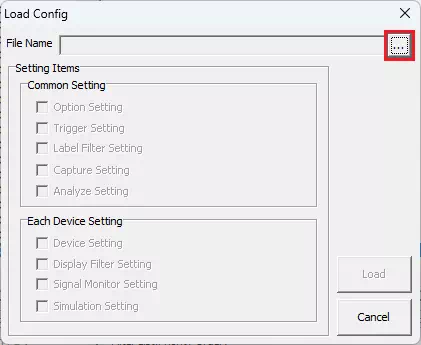
- Select the settings to apply
Use the Setting Items checkboxes in Load Config to specify whether to apply each setting. ON includes the setting; OFF excludes it.
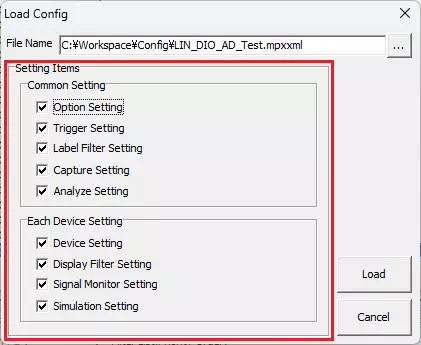
Checkboxes are disabled for settings not saved in the configuration file loaded in step 2.
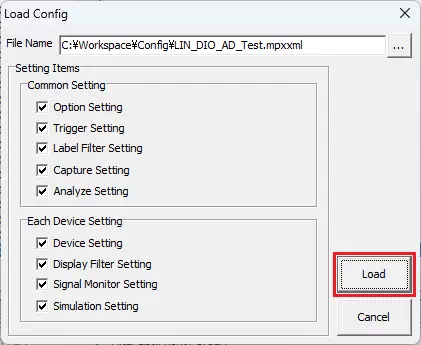
- Load the settings
Click the button in Load Config. The settings selected in step 3 are applied.
Behavior When Loading a Configuration File
When the Configuration File Contains Information for a Recognized MicroPeckerX
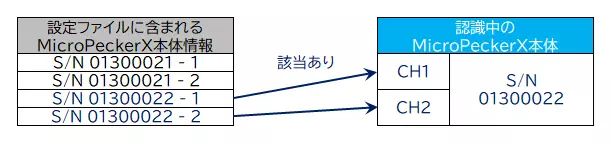
Settings matching the serial number of the recognized MicroPeckerX are applied.
Settings unchecked in Setting Items in Load Config are not applied from the loaded file. Their previous settings remain unchanged.
When the Configuration File Does Not Contain Information for a Recognized MicroPeckerX
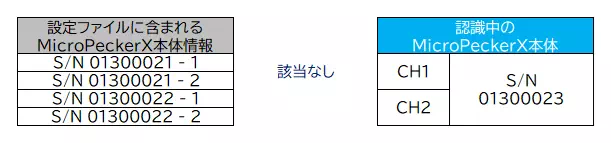
The following dialog appears.
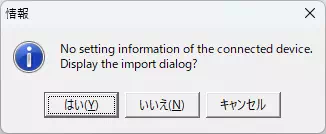
In this case, follow the steps below to select settings from the loaded configuration file and apply them to a recognized MicroPeckerX.
1. Open the Ch Config Import dialog
Click Yes in the following dialog. The selected common settings are applied first, and Ch Config Import opens.
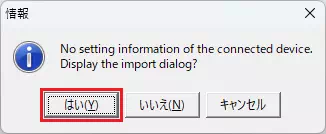
The Ch Config Import screenshots in this procedure show an older version. In the current version, click Close to close the dialog. Settings applied using Import remain in effect.
If you click a button other than Yes in step 1, the behavior is as follows:
- No loads the selected items from the configuration file without opening Ch Config Import and without restricting loading to connected devices. To assign channel settings to another device, select Yes.
- Cancel returns to Load Config.
2. Select the source settings
In Data List in Ch Config Import, select the settings from the loaded configuration file that you want to apply to a recognized MicroPeckerX.
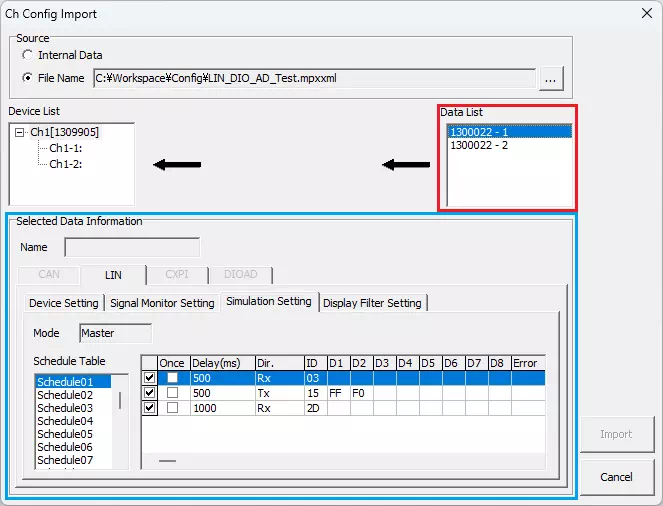
Selected Data Information shows a summary of the selected settings (per-channel settings only).
3. Select the destination MicroPeckerX
In Device List in Ch Config Import, select the channel of the recognized MicroPecker unit to which you want to apply the settings selected in step 2.
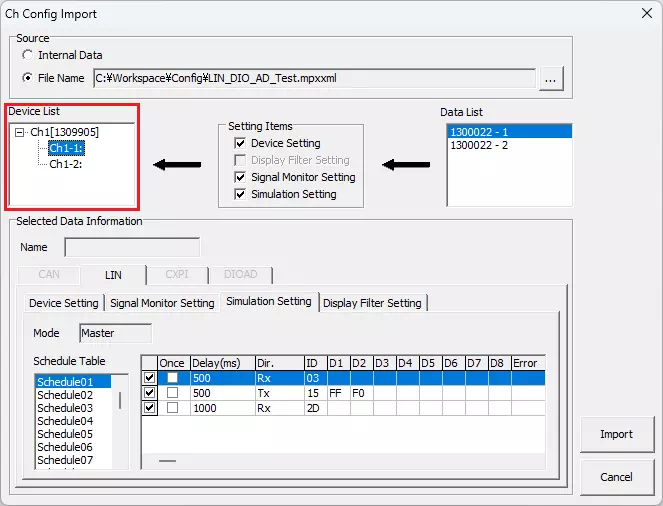
4. Select the settings to apply
Use the Setting Items checkboxes in Ch Config Import to select per-channel settings (Device Setting, Display Filter Setting, Signal Monitor Setting, Simulation Setting). ON includes the setting; OFF excludes it. If Signal Monitor Setting is unavailable, see Loading Restrictions.
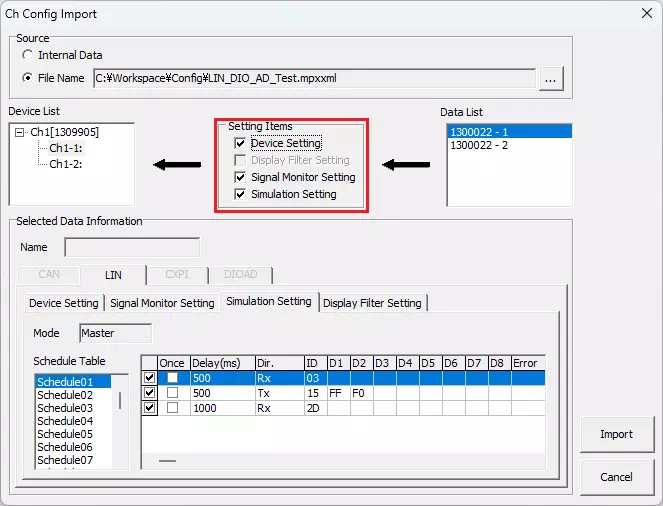
Setting Items is replaced by another message in either of the following cases:
- The settings selected in step 2 and the internal channel of the MicroPeckerX selected in step 3 use different protocols (for example, LIN settings and a DIO/AD internal channel).
Different Device Type is displayed. - Both the serial number and internal CH of the settings selected in step 2 match those of the MicroPeckerX selected in step 3.
Same Device is displayed.
5. Apply the settings to the MicroPeckerX
Click the  button in Ch Config Import to apply the selected settings to the target CH immediately. You can continue applying settings to another CH. Click Close when finished.
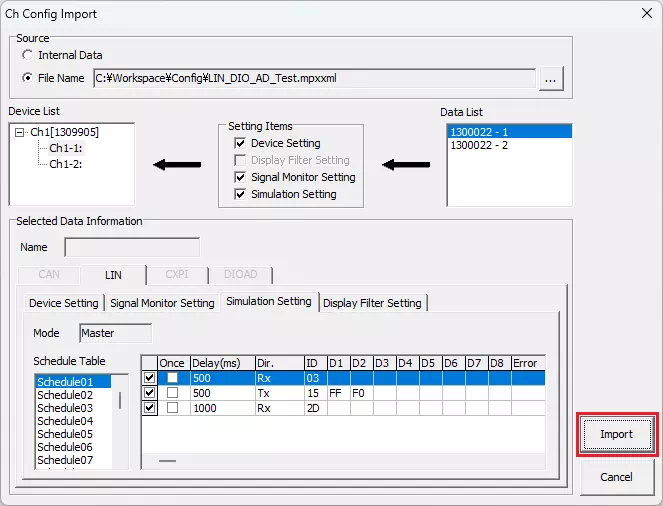
Ch Config Import applies settings to each internal channel of a MicroPeckerX.
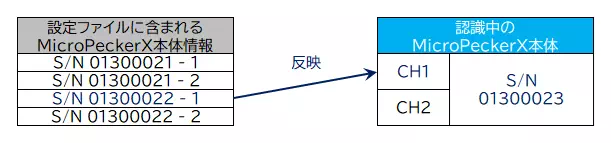
Load Config Dialog
The Load Config dialog loads settings for each window and the Option dialog from a configuration file.
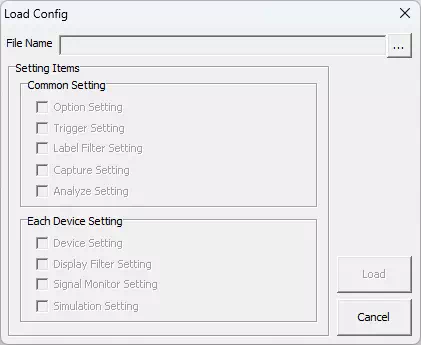
| Item | Description | Additional information | |
|---|---|---|---|
| File Name | Displays the full path to the configuration file specified in the file dialog opened using the button. | You cannot enter a full path directly in this text box. | |
| button | Opens a file dialog where you can specify the configuration file to load. | ||
| Setting Items | Common Setting | Specifies whether to load settings common to all channels. The checkbox states have the following meanings: [ON] Includes these settings. [OFF] Excludes these settings. | Changing this checkbox also changes the following five checkboxes. Option Setting, Trigger Setting, Label Filter Setting, Capture Setting, Analyze Setting |
| Option Setting | Specifies whether to load settings from Option dialog. The checkbox states have the following meanings: [ON] Includes these settings. [OFF] Excludes these settings. | ||
| Trigger Setting | Specifies whether to load settings from Trigger Window. The checkbox states have the following meanings: [ON] Includes these settings. [OFF] Excludes these settings. | ||
| Label Filter Setting | Specifies whether to load settings from Label Filter Window. The checkbox states have the following meanings: [ON] Includes these settings. [OFF] Excludes these settings. | ||
| Capture Setting | Specifies whether to load settings from Capture Window. The checkbox states have the following meanings: [ON] Includes these settings. [OFF] Excludes these settings. | This function is under development and is not available. | |
| Analyze Setting | Specifies whether to load settings from Analyze Window. The checkbox states have the following meanings: [ON] Includes these settings. [OFF] Excludes these settings. | ||
| Each Device Setting | Specifies whether to load per-channel settings. The checkbox states have the following meanings: [ON] Includes these settings. [OFF] Excludes these settings. | Changing this checkbox also changes the available checkboxes among the following items. Device Setting, Display Filter Setting, Signal Monitor Setting, Simulation Setting | |
| Device Setting | Specifies whether to load settings from Device Window. The checkbox states have the following meanings: [ON] Includes these settings. [OFF] Excludes these settings. | ||
| Display Filter Setting | Specifies whether to load settings from Display Filter Window. The checkbox states have the following meanings: [ON] Includes these settings. [OFF] Excludes these settings. | ||
| Signal Monitor Setting | Specifies whether to load settings from Signal Window. The checkbox states have the following meanings: [ON] Includes these settings. [OFF] Excludes these settings. | Applies to signal settings for the channels in use. Use Save/Load in Signal Catalog to save and restore the entire Catalog. If unavailable, see When Signal Settings Cannot Be Loaded. | |
| Simulation Setting | Specifies whether to load settings from Simulation Window. The checkbox states have the following meanings: [ON] Includes these settings. [OFF] Excludes these settings. | ||
| button | Loads settings from the configuration file specified in File Name according to Setting Items, and applies them to the GUI application. | ||
 button | Closes Load Config without loading settings. | ||
Setting Items checkboxes are disabled for settings not saved in the configuration file specified in File Name.
Ch Config Import Dialog
You can apply per-channel settings from the GUI application's internal data or a loaded configuration file to a recognized MicroPeckerX.
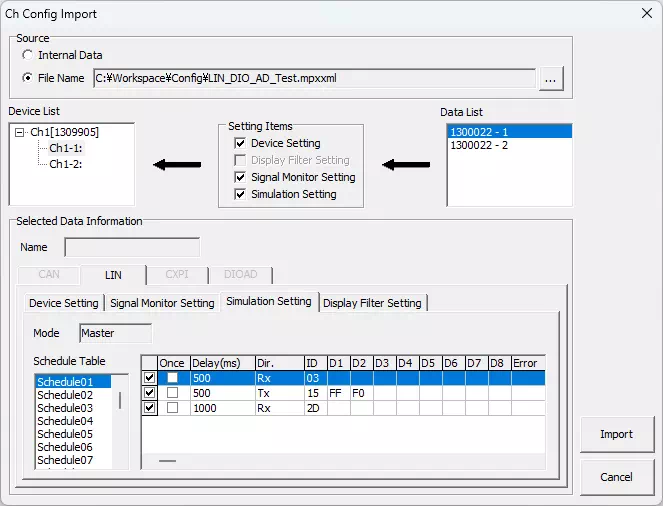
The screenshot shows an older version. In the current version, click Close to close the dialog. Settings applied using Import remain in effect.
| Item | Description | Additional information |
|---|---|---|
| Source | Selects the source data for the settings to apply. The radio button options have the following meanings: [Internal Data] Uses settings for currently or previously recognized MicroPeckerX units. [File Name] Uses settings from the loaded configuration file. | Click the  button to open a file dialog and specify a configuration file to load. After loading, the full path is displayed to the left of this button. File Name cannot be selected if no configuration file has been loaded. |
| Device List | Lists recognized MicroPecker units and lets you select the destination for the settings. | Settings are applied per internal channel. Selecting an item with a serial number does not allow settings to be applied. |
| Setting Items | Individually selects whether to apply the following four per-channel settings. Device Setting, Display Filter Setting, Signal Monitor Setting, Simulation Setting The checkbox states have the following meanings: [ON] Includes the setting. [OFF] Excludes the setting. | For Signal Monitor Setting, check the resulting CH assignments and Current Set contents. If unavailable, see When Signal Settings Cannot Be Loaded. Setting Items is replaced by a message in either of the following cases: • Different Device Type: the settings selected in Data List and the MicroPeckerX channel selected in Device List use different protocols (for example, LIN settings and a DIO/AD internal channel). • Same Device: both the serial number and internal CH of the settings selected in Data List match those of the MicroPeckerX selected in Device List. |
| Data List | Lists settings from the selected Source and lets you select settings to apply to a recognized MicroPeckerX. | Selecting settings displays a summary (per-channel settings only) in Selected Data Information. |
| Selected Data Information | Displays the protocol and a summary of the per-channel settings selected in Data List. | The protocol appears in the upper tabs; tabs for other protocols are disabled. Click each tab to switch the displayed per-channel settings. |
| button | Immediately applies the per-channel settings selected in Setting Items from the data selected in Data List to the MicroPeckerX CH selected in Device List. | The dialog remains open, so you can continue applying settings to another CH. |
| Close button | Closes the dialog. | CH settings applied using Import and common settings applied earlier remain in effect. |
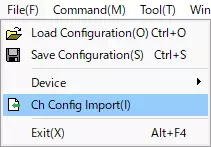
You can also open Ch Config Import by selecting File → Ch Config Import from the menu bar.